Skip to main content

Oil

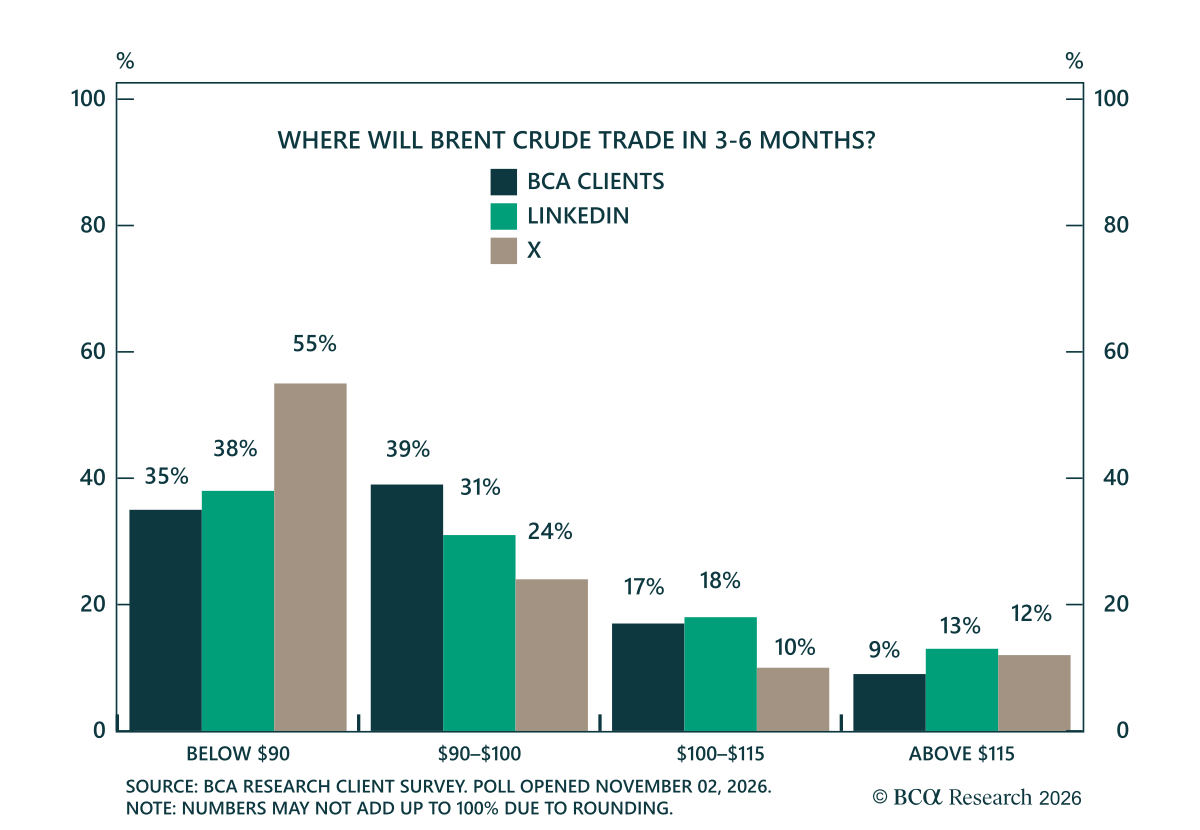
Our clients expect Brent to remain below $100 over the next 3-6 months. In last week's poll, we asked our clients where they see Brent trading in the coming months. The largest share of our clients (39%) sees it staying between $90 and $100 per barrel; 35%…

Another Netanyahu-led government would raise the risk of Israeli escalation and a major oil supply shock, while an opposition victory would reduce, but not eliminate, this risk due to its greater coordination with and deference to the US.
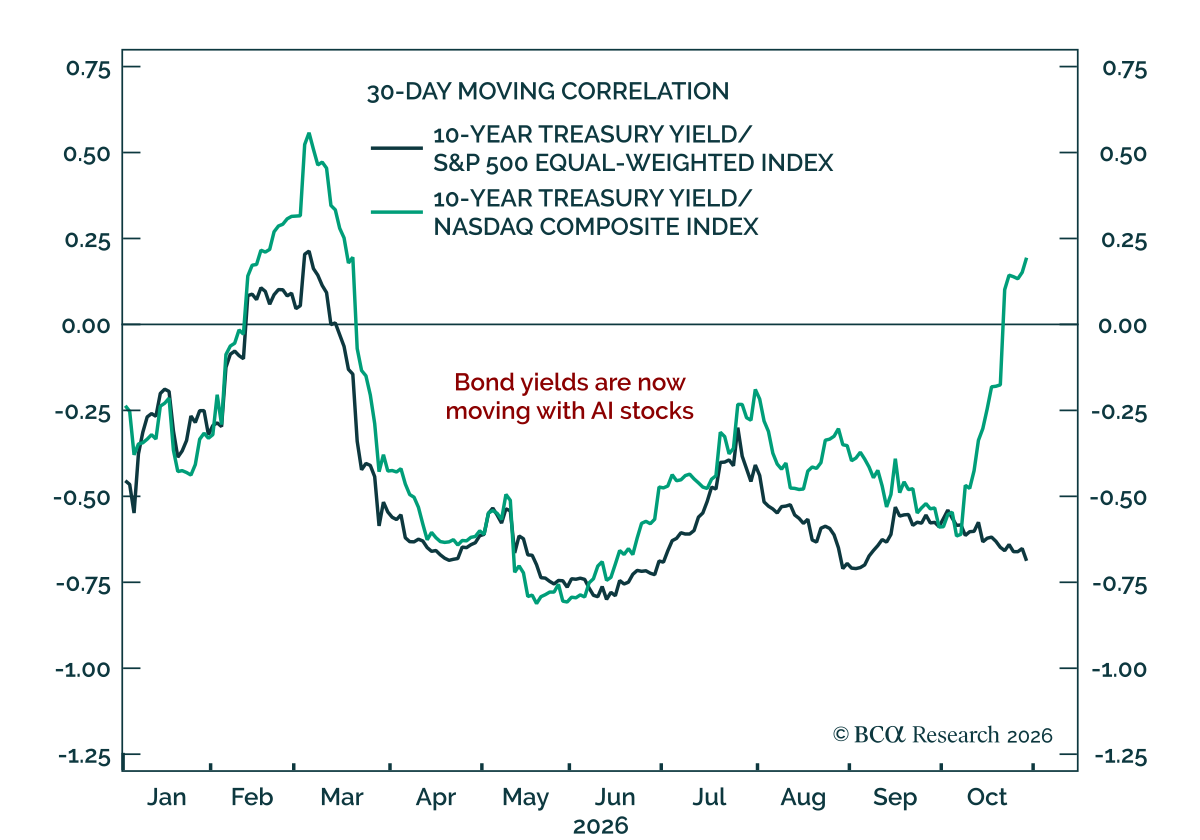
AI equity performance has replaced oil as the main driver of US Treasury yields, setting up a rotation out of AI stocks into the rest of the market. Our Chart Of The Week comes from Ryan Swift, our Chief US Bonds Strategist. Bond yields now track AI stocks…
The near-term risks to oil prices are decidedly to the upside. The US government reportedly warned several Gulf states that a “short, intense military campaign” may occur after next week’s midterm elections. Market betting odds of the US-Iran ceasefire…
Our Commodity strategists see little room for crack spreads to narrow further in the near term and expect product prices to follow crude higher. Despite the resilient recovery in Middle Eastern crude exports, risks to the supply outlook have driven Brent to…

Crude has led the latest rally, leaving refined product prices behind and crack spreads narrower. We explain why the spread compression is unlikely to continue and why product prices will follow crude.

There is significant room for Red Sea shipping to recover over the next two years. Saudi Arabian tanker departures have fallen to around 20 ships a week, down 85% from ~125 on the eve of the US-Iran conflict. Red Sea loadings picked up the slack from lower…

Iran is effectively trying to create an “October surprise,” an adage that refers to a pre-election crisis that alters the trajectory of polling and the eventual outcome. It is likely to be successful, with oil prices likely to face upward momentum from here. The intention would be to ensure that oil prices do not see any significant decline from now until November 3. 

The big risk for the markets remains a flare up in the Middle East conflict. The Fed appears to be targeting geopolitics as much as inflation fundamentals. By the logic of transitive properties, therefore, more war means more hikes. That’s negative. So why are we not bearish on equities and bonds? Because President Trump holds his own faith in his hands. With his unfavourability near all-time highs (Chart of the Month), the conflict in Iran is at its end. Our worry? A Democratic Party sweep that surprises in its intensity and thus forces markets to start pricing in a leftward tilt in 2028.
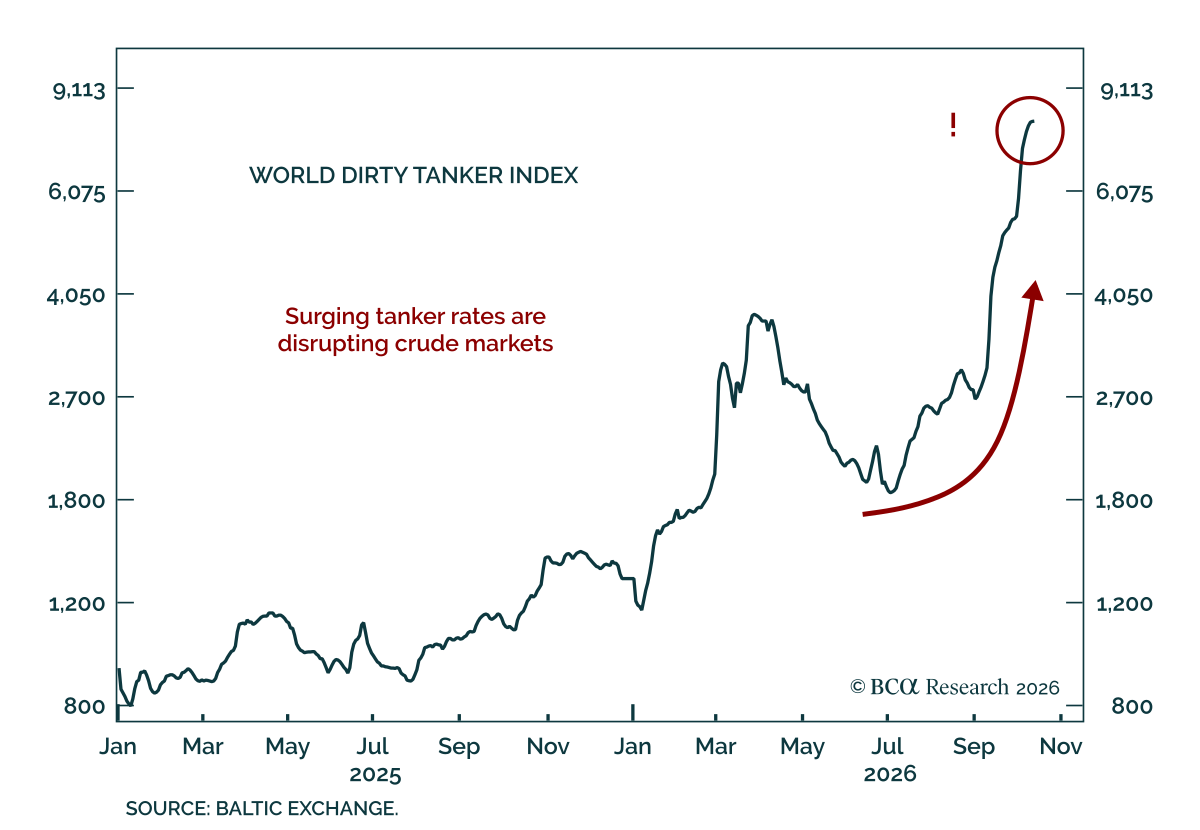
Our Commodity strategists expect crude prices to stay elevated until the Iran conflict and the logistical disruptions around it are resolved. Brent has failed to break decisively below $100/bbl even with Middle Eastern exports back at pre-crisis levels. Steep…